June 19, 2026
If you've ever used "trade show" and "exhibition" interchangeably, you're not alone. Most people treat them as synonyms, and in casual conversation, no one's going to pull you up on it. But if you're planning an event, deciding where to participate, or trying to figure out which format fits your marketing goals, the distinction actually matters.
They're related, but they're not the same thing. Here's how to tell them apart.
An exhibition is a broad term for any organised event where items, products, ideas, or works are displayed to an audience. The word itself doesn't tell you much about who's attending or what the commercial intent is — it just describes the act of putting things on display for people to see.
That breadth is the point. An art exhibition in a gallery is an exhibition. A public science showcase is an exhibition. A consumer lifestyle expo at a convention centre is an exhibition. A company setting up a display at a corporate event is also exhibiting. The category is wide, and the goals can vary dramatically depending on the context.
In the commercial and corporate events space, an exhibition typically refers to a curated display environment where brands, organisations, or individuals showcase their products, services, or capabilities to attendees. The audience can be the general public, industry professionals, or a specific invited group, depending on the event's purpose.
Exhibitions tend to prioritise visibility and awareness. The goal is often to attract a wide range of visitors, create brand impressions, and build familiarity with what's on offer.
A trade show is a more specific type of event. It's industry-focused, typically closed to the general public, and designed primarily for business-to-business (B2B) interaction. Companies within a specific sector gather to showcase their products and services to qualified buyers, distributors, partners, and industry peers.
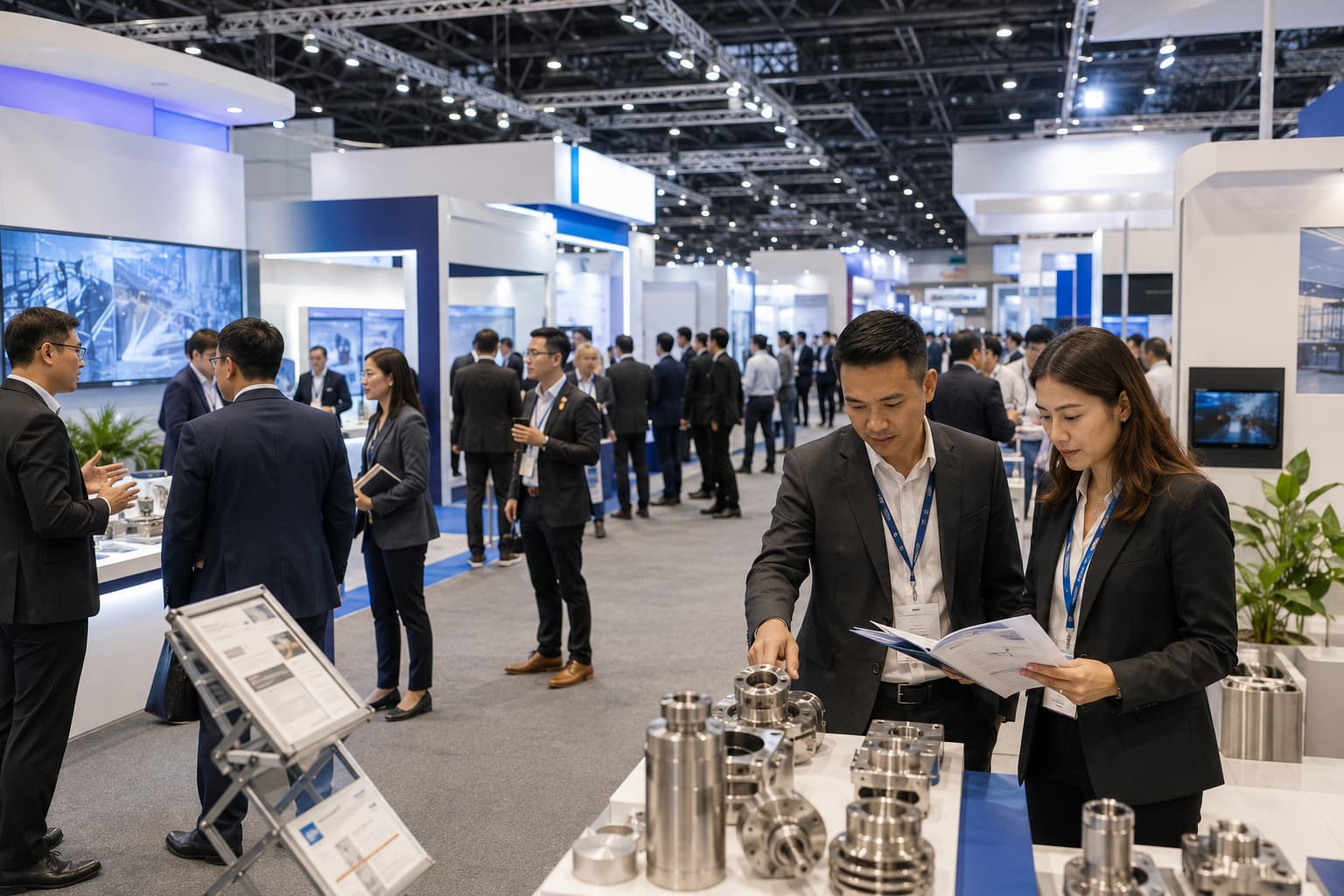
Think of trade shows as industry meetings that happen to have a physical display component. The exhibit booths are there, but the real purpose is business: making deals, exploring partnerships, comparing competitors, and keeping up with what's moving in the market.
Access to trade shows is often restricted. Attendees usually need to register in advance, provide proof of industry affiliation, or receive an invitation. This isn't just gatekeeping for its own sake; it keeps the conversation professional and ensures that the people walking through the door are genuinely relevant to the exhibiting companies.
Common examples include manufacturing expos, technology industry summits, food and beverage trade fairs, and medical device showcases. In Malaysia, events like the Malaysia International Halal Showcase (MIHAS) are good examples of trade-oriented events targeting industry buyers and professionals rather than everyday consumers.
Now that both terms have their own definitions, here's how they compare across the details that actually matter for planning and participation:
This is the clearest dividing line. Exhibitions cast a wide net. They're designed for volume, for reaching as many people as possible, and for making a visual and experiential impact on a broad audience. Trade shows are the opposite; they're built for precision. The point isn't to impress everyone who walks by, it's to have the right conversations with the right people.
A brand launching a new consumer product might invest in a public exhibition or pop-up showcase to generate buzz and reach everyday buyers. That same brand preparing to pitch a manufacturing partnership or distribution agreement would be far better served by a relevant trade show where decision-makers are actively looking to do business.
Exhibitions often prioritise experience. Interactive displays, live demonstrations, branded environments, and entertainment are common because the goal is engagement and impression. The visitor is browsing, exploring, and discovering.
Trade shows run differently. There's still a display component, but it's layered with pre-scheduled meetings, product presentations to specific buyers, contract discussions, and industry networking sessions. The exhibitor's floor team isn't just greeting visitors; they're qualifying leads, pitching, and following up.
Exhibitions can run for extended periods, from a weekend to several months, depending on their nature. Art exhibitions and science showcases are obvious examples, but even commercial exhibitions designed around a product launch or brand campaign can be structured as multi-week activations.
Trade shows tend to be compressed into a few intense days. The focus is high-density engagement over a short window, which means preparation, booth design, and sales readiness all need to be sharper.
In practice, many large events combine both formats. A major industry conference might have a trade show floor running alongside its conference sessions, with a public showcase day added at the end to bring in broader attendance. Consumer electronics events, for example, often have trade-only days for industry buyers before opening the doors to the public.
The label on the event doesn't always tell you everything. When deciding whether to participate or exhibit at an event, look past the name and into who actually attends, what the commercial intent is, and what a realistic return on your investment looks like.
The answer depends on what you're trying to achieve.
If you're focused on brand awareness, consumer reach, or launching something to the public, an exhibition-style event or activation is likely the better fit. This is where a brand engagement strategy and well-designed experiential display can do real work, putting your brand in front of people who might not have discovered you otherwise. For consumer-facing brands, street activations and roadshows work along a similar principle, bringing the brand directly to the audience rather than waiting for them to come to you.
If you're trying to build B2B relationships, close distribution deals, or position your brand within a specific industry, a trade show is the more productive environment. The conversations are more targeted, and the people in the room are there specifically to do business.
For brands that need both, some of the most effective approaches layer a trade show presence with a broader consumer campaign running in parallel. You're speaking to the industry on one channel and the public on another.
If you're putting together a product launch, brand showcase, or exhibition presence and want help designing an experience that actually lands, get in touch with our team. As a leading event management company in Malaysia, we've worked across both formats and know how to build display environments that get results.
An exhibition is a broad category. A trade show is a specific type of event within that category, defined by its B2B focus, industry audience, and commercial intent. Knowing which one you're dealing with, or which one you need, helps you plan smarter and spend your event budget where it'll actually deliver.